 INTELLIGENT CLINICAL OPERATIONS
The patient story is split
Appointments, treatment plans, messages and payments live in separate views. Staff must reconstruct context manually.
iQlinic is a clinical behavioral intelligence layer for dental clinics. It works alongside your existing systems to unify patient context, surface treatment-continuity gaps and help your team decide who may need attention—and why.
A signal is not a verdict. iQlinic assembles the observable context before the team chooses an action.
Most dental systems record events. The operational gap appears between those events: a treatment plan without a next appointment, an unanswered question, a repeated cancellation or a patient journey that quietly stops.
Appointments, treatment plans, messages and payments live in separate views. Staff must reconstruct context manually.
Large worklists do not tell the team which case deserves review first or what question is still open.
A prediction without visible evidence is difficult to challenge, adopt or use responsibly in a healthcare workflow.
iQlinic does not replace clinical judgment or your practice management software. It adds an intelligence layer that helps people see the right context sooner.
Create a time-ordered view of the clinical, operational and communication events that matter to the next decision.
Surface observable gaps such as a missing next step, prolonged silence or an unresolved patient question.
Show why a case appears in the worklist instead of hiding the reasoning behind a score.
Help the team choose the owner, channel and appropriate next step while keeping approval with a person.
A controlled implementation starts with mapping, read-only access and a limited use case. Value is measured before scope expands.
Appointments, treatment plans, patient records, permitted communications and financial events remain in their source systems.
Events are normalized into patient context. Rules and models surface patterns with visible supporting evidence.
The team reviews the reason, chooses the next action and records the outcome so the system can improve.
Two technical views show the end-to-end decision flow and the multi-task architecture behind treatment-continuity, timing, provider and scheduling recommendations.
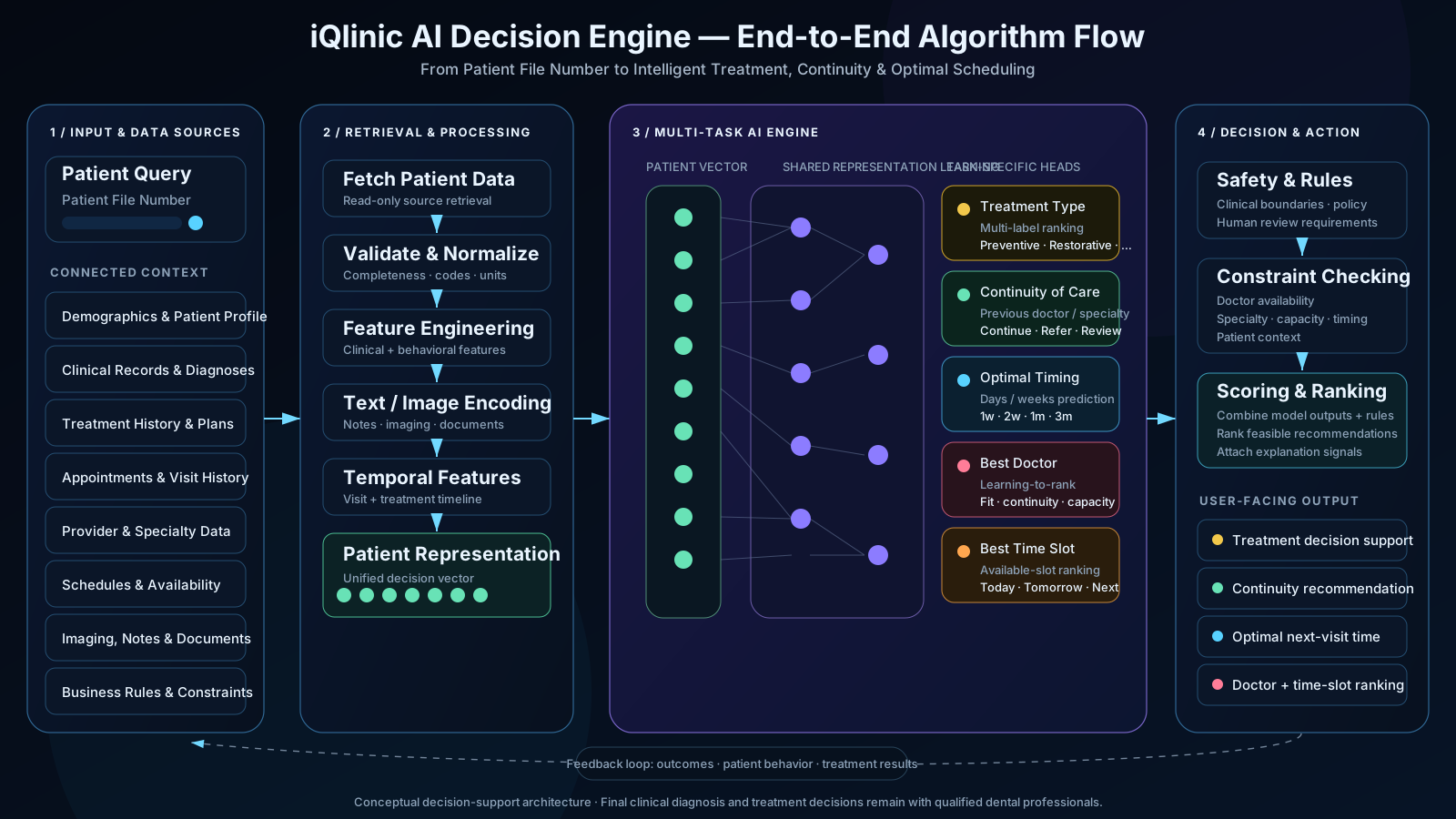
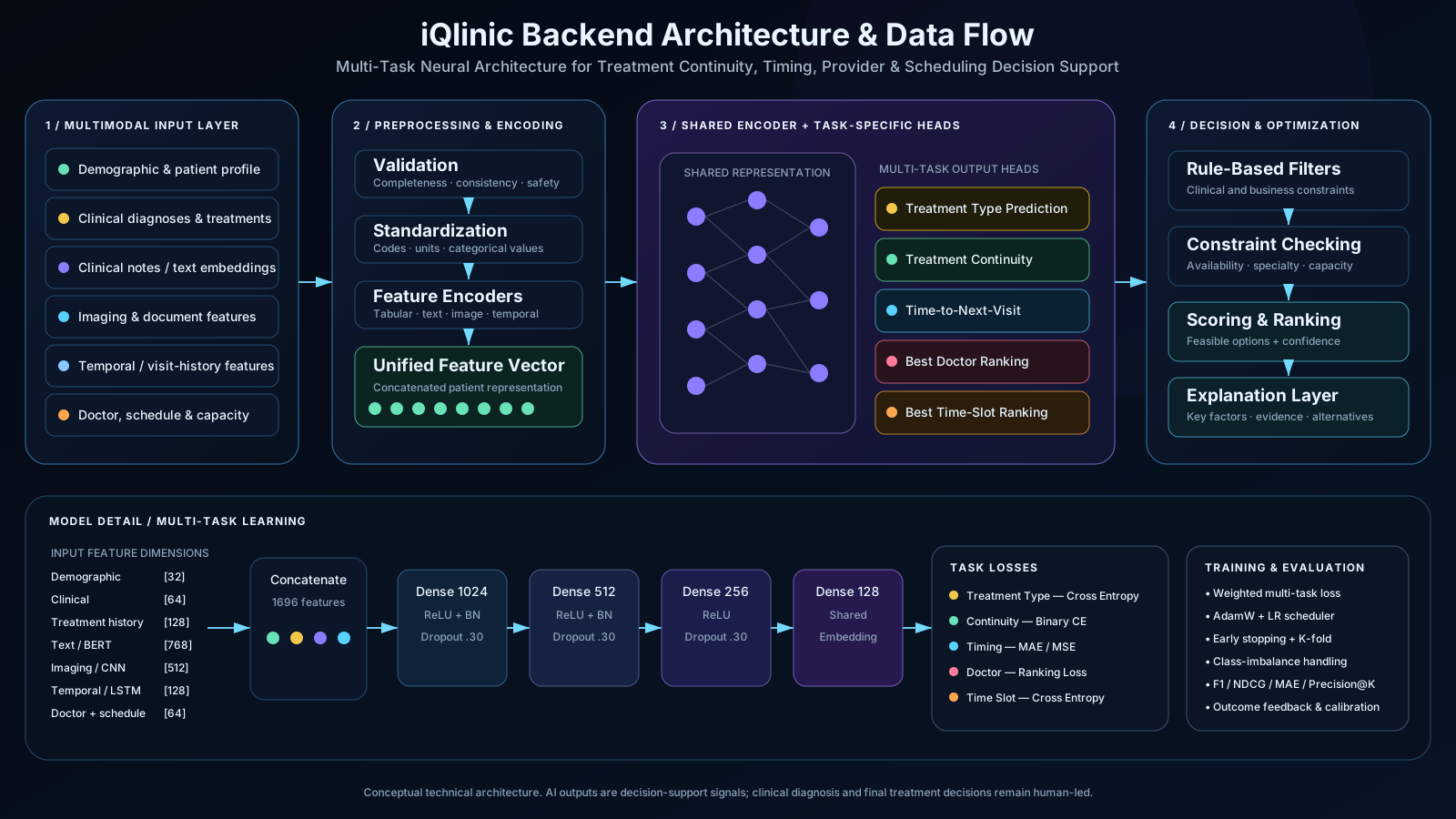
Concept architecture for decision support. Diagnosis and final treatment decisions remain with qualified dental professionals.
iQlinic is designed for clinics that already have operational software but still lack a unified view of what requires attention.
| Capability | Typical practice software | iQlinic intelligence layer |
|---|---|---|
| Record appointments and treatments | Core function | Uses the events as decision context |
| Store the patient file | Core function | Connects meaningful events into Patient 360 |
| Generate a follow-up list | Often rule-based | Prioritizes review with visible reasons |
| Explain why action is timely | Limited or manual | Shows the signal, timing and open question |
| Learn from contact outcomes | Inconsistent | Structures outcomes for measurement and refinement |
The first goal is not a large transformation. It is a narrow, measurable proof that the clinic can trust.
A useful first conversation is about your operating reality, not a generic feature list.
Important patient context is spread across scheduling, treatment, communication or finance.
Staff spend time rebuilding priorities instead of resolving the patient’s actual open question.
Managers and clinicians expect to inspect and challenge the evidence behind a recommendation.
The first use case must work beside current processes and prove value before expansion.
Sensitive messages, clinical decisions and exceptions must stay with accountable team members.
The clinic is willing to compare the current workflow with a limited pilot using agreed metrics.
iQlinic is decision support—not autonomous diagnosis, treatment selection or unsupervised patient communication. Access, evidence, review and outcome logging are part of the product design.
No. iQlinic is designed as an intelligence layer beside existing clinic systems. It connects selected events into decision context rather than replacing charting, billing or scheduling software.
No. Diagnosis and treatment decisions remain with qualified dental professionals. iQlinic focuses on operational context, continuity signals and decision support.
A first pilot should not require a full migration. The recommended approach is a limited, read-only connection to the data needed for one clearly defined use case.
A useful priority includes observable reasons—for example, no next appointment, an open treatment plan and an unanswered question—not only a probability score.
Measure task time, data coverage, recommendation acceptance, important errors, workflow outcome and unintended effects. Revenue alone is not a sufficient measure.
Start with a private fit assessment. We map one workflow, identify required data and define what a successful, controlled pilot would need to prove.
Searching for dental clinic AI software should lead to a buying decision, not a feature catalogue. This page explains the category, the operational problem, the implementation boundary and the evidence a clinic should require before choosing a platform.
Bring one workflow that feels fragmented or difficult to prioritize. We will map the decision, the minimum data and a controlled way to test whether iQlinic can create measurable value.